Understanding how long a smartphone remains reliable helps buyers make informed decisions. In 2025, longevity depends on three key factors: software support, hardware durability, and battery health. Here’s a comprehensive guide to phone lifespans by brand, so you can choose wisely.
Apple iPhone: 6 to 8 Years
- Software updates: Apple provides major iOS updates for around 5 years, followed by security patches for another 1–2 years.
- Hardware durability: iPhones generally maintain 80% battery health after approximately 500 charge cycles. Repairs and battery replacements extend lifespan up to 7 years .
- Real world evidence: Many users continue using iPhone 8/XR series from 2017–2018 into 2025.
Verdict: Exceptional longevity with strong updates and support.
Samsung: 3 to 7 Years
- Software and security updates: Flagship Galaxy S‑series and newer A‑series devices offer 4 major Android updates plus up to 7 years of security patches.
- Hardware: Durable construction and battery life mean flagship phones remain solid performers for 5–6 years.
- Real world experience: Users report Galaxy S21 and S23 lasting at least 5 years; other users note 3–4 years for mid-range models .
Verdict: Flagships offer long lifespans; mid-rangers are good for 4–6 years.
Google Pixel: 3 to 5 Years
- Software and security updates: Traditionally 3 years of Android updates with extended security patches up to 5 years for newer models .
- Hardware: Quality builds but battery degradation can start by year 3.
- Real world use: Most users report smooth performance for 4–5 years before needing battery replacement.
Verdict: Excellent software longevity; expect 4–5 year usable lifespan.
Xiaomi/Redmi/Poco: 2 to 4 Years
- Updates: Lower-end models offer ~2 years Android support; flagships may receive 3–4 years of updates and security patches.
- Hardware: Build quality is solid, but battery and thermal performance may decline after 3 years.
- Real world feedback: Users keep phones for around 3 years; battery changes can extend life further .
Verdict: Good value, with lifespan dependent on model and care.
Oppo, Vivo, Realme: 2 to 3 Years
- Update cycle: Typically 2–3 years of Android updates and 3–4 years of security patches
- Hardware: Generally reliable for 2–3 years before performance issues begin.
- User insights: These brands match Xiaomi in lifespan; daily use lasts around 3 years.
Verdict: Best suited for moderate lifespans; upgrade after approximately 3 years.
OnePlus, Motorola, Nokia: 3 to 5 Years
- OnePlus: Typically offers 3 Android updates and 4 years of security patches .
- Motorola: Offers 2 years of Android updates and 3 years of security updates .
- Nokia (HMD): Varies—G-series gets around 2 years Android, X-series 3 years .
Verdict: Solid 3–4 year lifespans; flagship models may perform longer.
Average Phone Lifespan by Brand (Summary)
According to recent data:
- iPhone: 6–8 years
- Samsung: 3–7 years
- Google Pixel: 3–5 years
- Xiaomi/Oppo/Vivo/Realme: 2–4 years
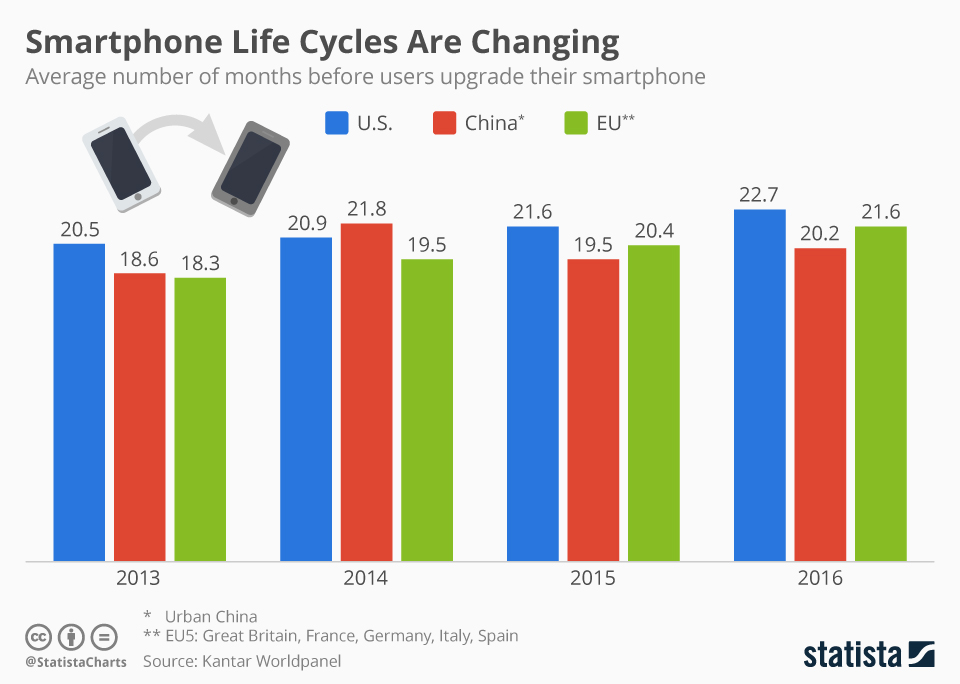
Global average lifespan is approximately 2.5 years.
How to Extend Your Phone’s Life
- Maintain battery health: avoid deep discharges and use original chargers .
- Install software updates promptly.
- Use protective cases and screen guards; avoid extreme temperatures.
- Monitor storage and background apps to keep performance smooth.

Conclusion
If you want longevity, especially beyond 5 years, iPhones and premium Samsung flagships are the most reliable choices. Google Pixel and OnePlus offer excellent performance for 4–5 years. Xiaomi, Oppo, Vivo and Realme deliver good value for 2–4 years. For most users facing rapid tech cycles, a 3–4 year replacement strategy makes sense.
#PhoneLongevity #SmartphoneLifespan #TechBuyersGuide #MobileDurability #iPhoneSupport #AndroidUpdateCycle #SmartphoneCare