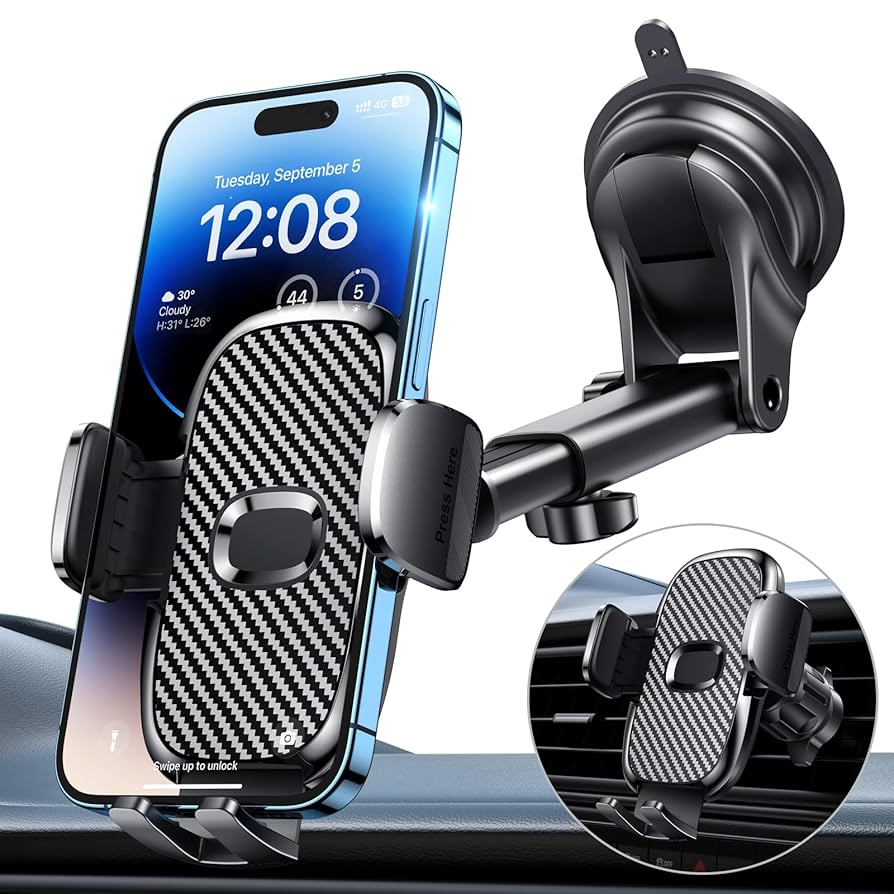
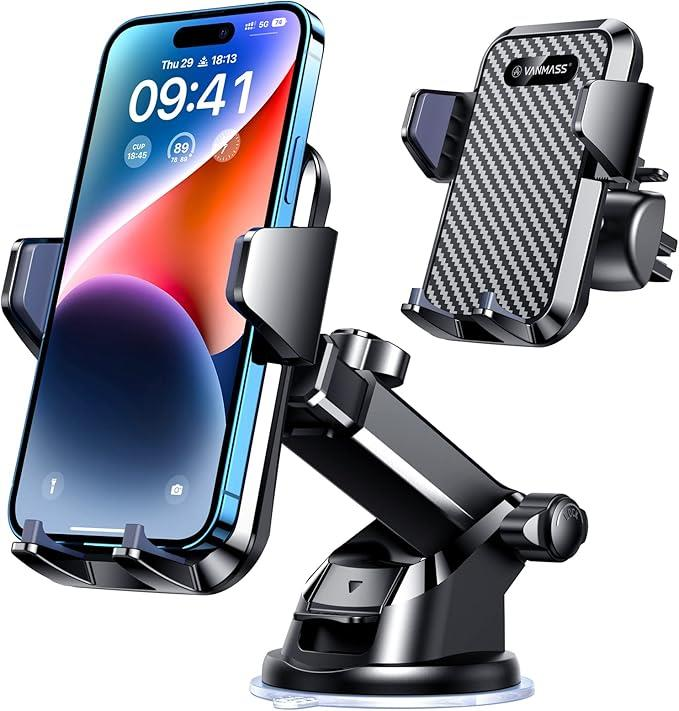
Magnetic phone holders have surged in popularity for their sleek design and one-handed convenience, but concerns linger about potential damage to smartphones. Could these convenient mounts harm your $1,000 device? Extensive testing and technical analysis reveal a reassuring consensus: modern smartphones are engineered to withstand magnetic exposure, making high-quality holders safe when used properly.
How Magnetic Holders Work: Minimal Risk Design
Magnetic phone mounts operate through a simple principle: a neodymium magnet in the base attracts a thin metal plate attached to your phone or case. Contrary to popular fears:
- Magnetic fields are localized: The field strength rapidly diminishes with distance, posing no risk to internal components .
- Magnets are integrated into phones already: Speakers, camera autofocus systems, and MagSafe chargers all contain magnets .
- Holding power is optimized: Military-grade mounts (e.g., YRU’s 80LBS suction models) prioritize security over excessive magnetic force .
Debunking 5 Common Safety Myths
Myth 1: “Magnets Damage Phone Batteries”
Reality: Lithium-ion batteries are immune to magnetic fields. Charging circuits regulate energy flow independently. Overheating risks stem from poor-quality chargers or blocked ventilation—not magnets .
Myth 2: “Holders Erase Data or Corrupt Storage”
Reality: Solid-state drives (SSDs) in modern phones store data electrically, not magnetically. Unlike vintage hard drives or floppy disks, magnets cannot alter your photos, contacts, or apps .
Myth 3: “GPS and Cellular Signals Are Disrupted”
Reality: GPS relies on satellite triangulation, while cellular signals use radio waves—neither is affected by magnetic fields. Metal plates can cause interference if placed directly over antennas (typically along phone edges), but proper positioning avoids this .
Myth 4: “Magnets Destroy Phone Screens”
Reality: OLED/LCD screens operate via electrical currents, not magnetic alignment. Test it yourself: place a magnet against your screen—no distortion occurs .

Myth 5: “Compass Errors Are Permanent”
Reality: Strong magnets may temporarily skew compass calibration during use, but accuracy restores immediately after removal. For navigation apps, this rarely impacts route tracking.
Genuine Risks and How to Mitigate Them
While magnetic holders are overwhelmingly safe, these precautions ensure trouble-free use:
- Wireless Charging Interference: Metal plates block charging coils. Solutions:
- Use MagSafe-compatible holders (iPhones 12+) with built-in rings .
- Position plates near the phone’s top edge, away from central charging coils .
- Overheating from Poor Cases: Thick, non-breathable cases trap heat. Opt for ventilated designs if mounting during extended navigation.
- Physical Damage from Falls: Weak magnets risk drops on bumpy roads. Choose holders with ≥50LB pull force (e.g., N50-grade neodymium magnets) .
- Adhesive Damage: Cheap metal plates leave residue. Use plates with automotive-grade adhesives rated for high temperatures .
Table: Magnetic Holder Safety Checklist
| Risk Factor | Safe Practice | Products to Consider |
|---|---|---|
| Wireless Charging | Use MagSafe holders or top-edge plates | MOFT MagSafe Holders |
| Signal Interference | Avoid antenna areas (check phone manual) | OMOTON vent mounts |
| Phone Falling | Select military-grade magnets | YRU Ultra Strong Mount |
| Dashboard Damage | Use epoxy-resin suction cups | Scosche MagicMount |
Why Experts and Manufacturers Approve
- Apple’s MagSafe endorsement: iPhones 12+ integrate magnets for charging and mounting, confirming safety .
- ISO-certified testing: Reputable brands (Scosche, OMOTON) comply with IEC 62368 safety standards for electromagnetic compatibility .
- No documented damage cases: CPSC recalls focus on battery fires in power banks—not magnetic holders .
Choosing a Truly Safe Holder: 4 Key Criteria
- Certified Magnets: Look for N50/N55-grade neodymium magnets with pull force matched to your phone’s weight.
- Secure Mounting: Suction cups should withstand 80LBS+ force and high temperatures (tested to 212°F/100°C) .
- Case Compatibility: Ensure plates work with your case thickness (≤0.7 inches). Thin cases optimize magnetic strength.
- Ventilated Design: Avoid holders enclosing the phone; open frames prevent overheating.
The Verdict: Convenience Without Compromise
Magnetic phone holders are safe for 99% of modern smartphones when using well-designed products. While no accessory is risk-free, the combination of advanced phone engineering and responsible holder design minimizes hazards to near-zero. By selecting certified mounts (e.g., MagSafe-compatible or MIL-STD-tested), positioning metal plates wisely, and avoiding ultra-budget options, drivers gain hands-free convenience without sacrificing device integrity.
As industry leader OMOTON states: “The real danger isn’t the magnet—it’s a poorly designed mount dropping your phone” . Prioritize quality over cost, and magnetic holders become a smart addition to your tech ecosystem.
Image References:
- Diagram showing magnetic field lines around a phone holder and phone
- Comparison of metal plate placements: blocking vs. non-blocking wireless charging coils
- Close-up of MagSafe ring alignment on iPhone
- Thermal imaging showing phone temperature with/without ventilated case
- Stress test of military-grade suction cup on windshield
#PhoneHolderSafety #MagneticMount #TechMyths #SmartphoneAccessories #DriveSafe #MagSafe #PhoneSafety #CarTech #MagnetTruth #TechTips